
What is an API?
What is an API, and why does it matter? This article explains APIs in a simple way with practical examples.
Let's start with a type of interface you already know. Users interact with applications through user interfaces, often called UIs. A UI can be graphical, with buttons and forms. As the name implies, it is designed for human users.

This works well when one large monolithic application handles most tasks in one place. But when multiple specialized applications are used instead, things become more complicated. Applications do not work together on their own. They are separate systems with clear boundaries and no connections to other applications.
These isolated systems are often called silos because they resemble vertical towers standing next to each other. Each silo covers its own stack, from the graphical user interface and user management to the business logic and database. The systems exist side by side, but they are not integrated.
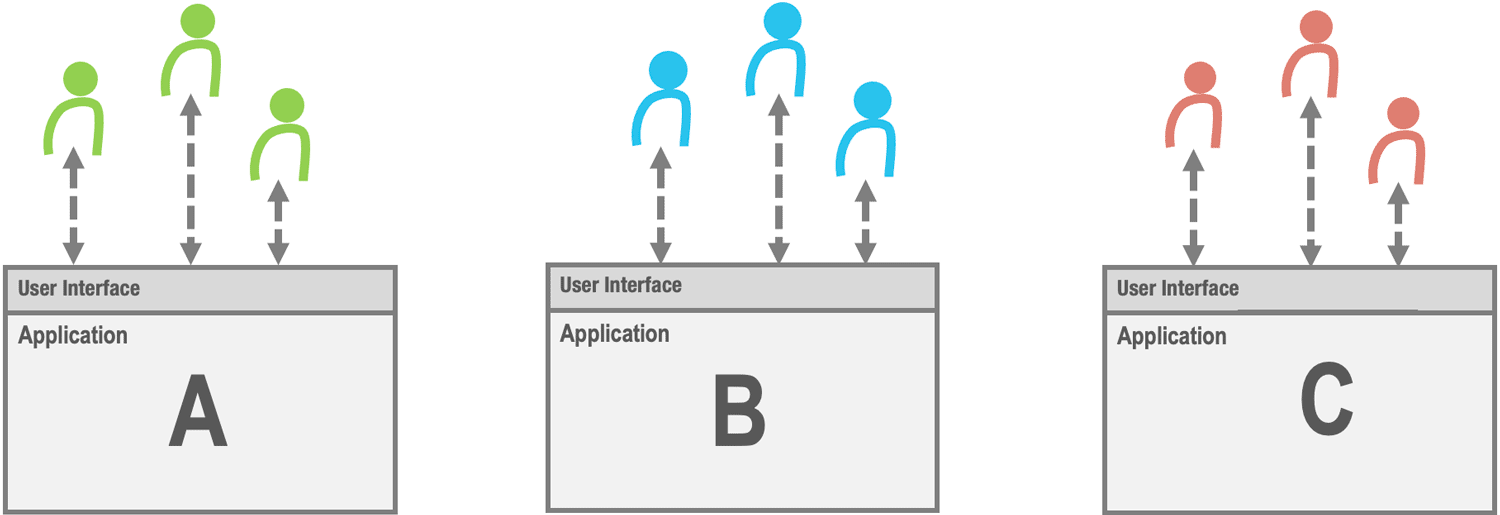
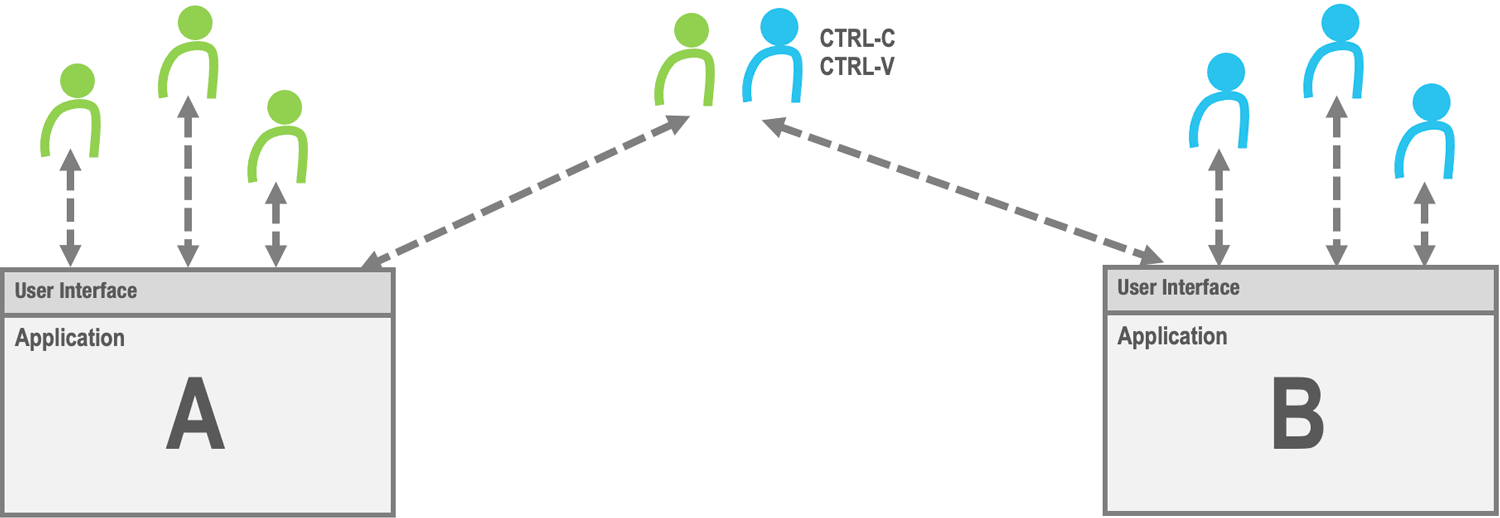
As a result, users often needed a separate login for each system. They had to copy and paste data manually between applications or repeat the same steps in different systems to complete one business process.
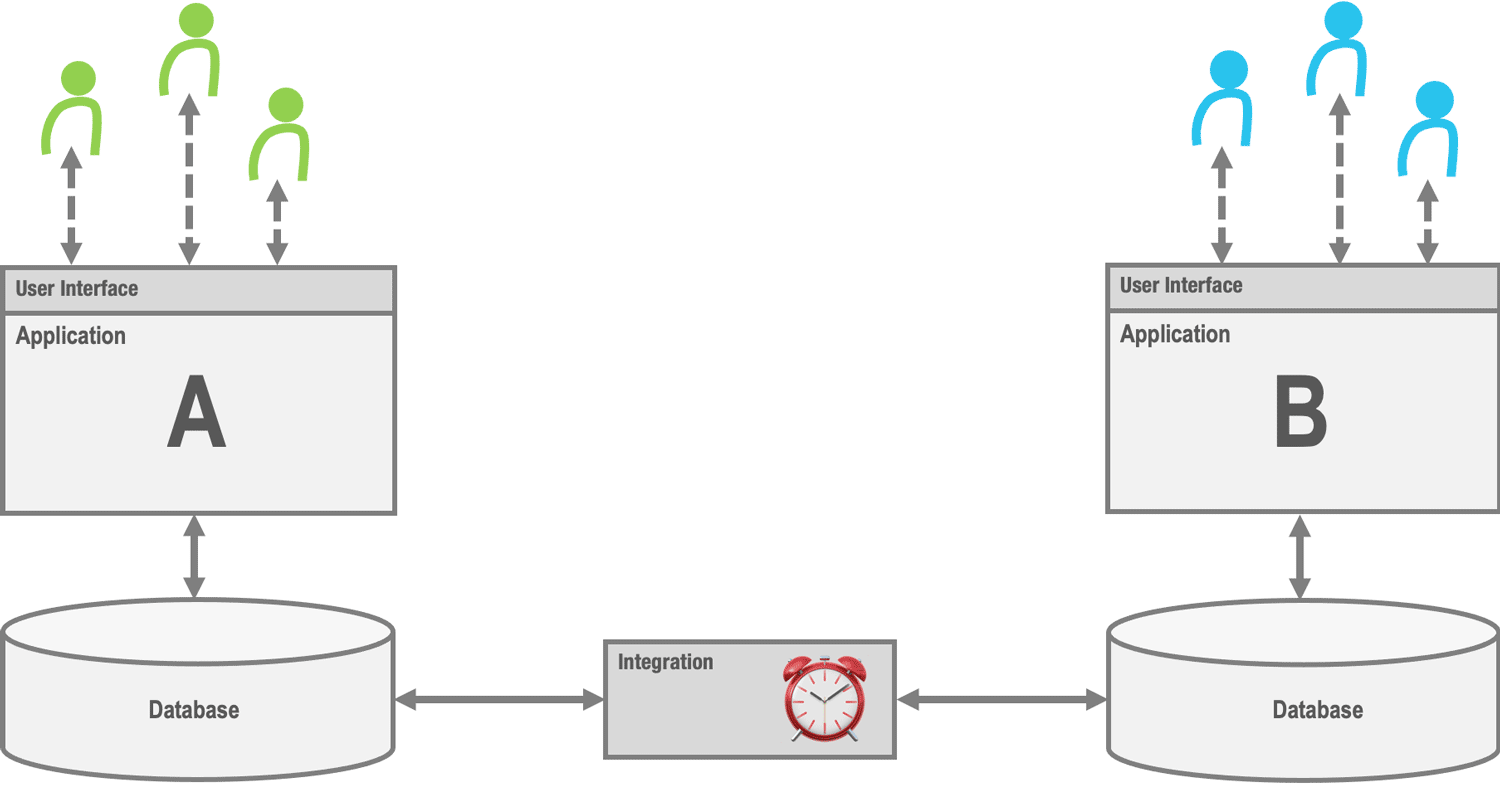
If an application does not offer any interface beyond its user interface, integration becomes difficult. A common workaround is to access the underlying database directly. For example, an Extract Transform Load (ETL) tool might periodically read records from the database of application B and insert them into application A.
But database integration has several drawbacks. It only moves data and doesn't trigger or control business processes. The interface is highly technical, with table and field names that are often cryptic. It is also fragile. Even small changes to the internal database structure of application A or B after an update can easily break the integration.
Direct database integration is therefore often more of an emergency workaround than a sustainable solution.
API stands for Application Programming Interface. An API is an interface, but not for humans. It is an interface for other applications. You can think of it as a side door into an application. Instead of going through the user interface, other applications can use this door to access data or call functions in a controlled way.
Application A can call the API of application B. In this case, application B acts as the server, and application A as the API client. To make this work, application A needs a client component that can send requests to B and process the responses.
There may still be humans working with application A. But they do not use the API directly. Instead, they click a button in A, and that application uses the API of application B in the background to complete the task.
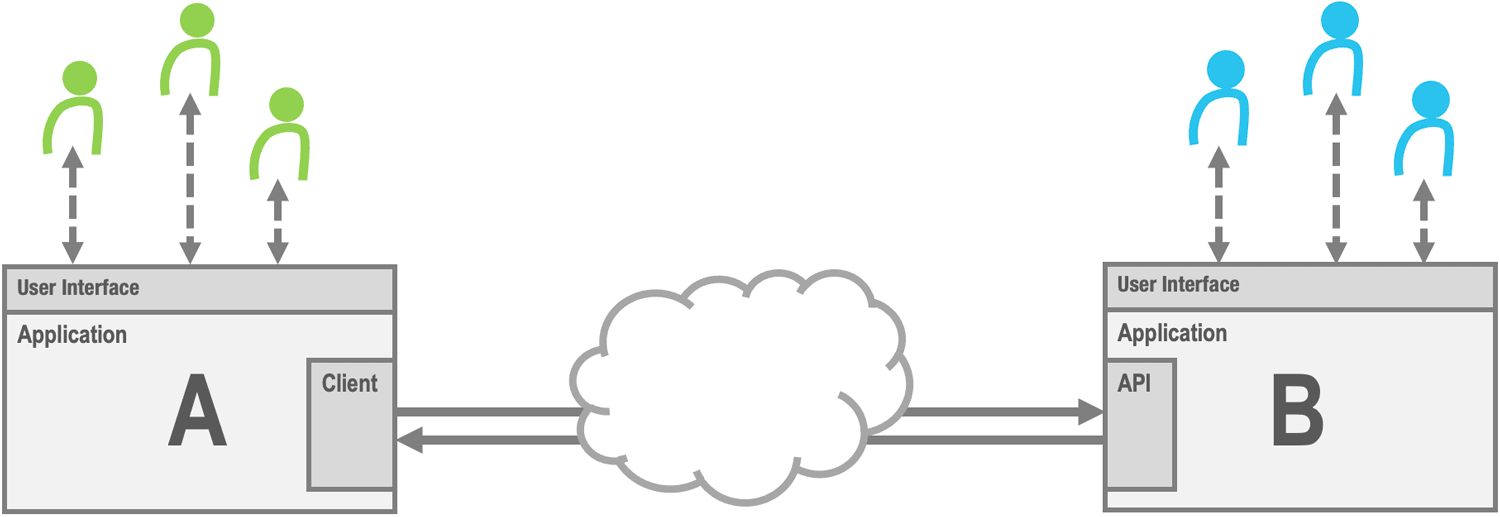
Usually, more than one client can use the same API. A web application, a mobile app, a partner system, or an internal service can all connect to the same API.
Most modern API technologies such as REST, GraphQL, or gRPC use HTTP, the protocol of the web, to exchange messages. This makes it possible to route API requests across firewalls and organizational boundaries.
API == REST with JSON
You sometimes find this equation on the internet. It is true that many APIs today use HTTP, JSON, and follow some REST principles. However, the concept of an API is broader. At its core, an API is simply an interface that allows applications to interact with each other. This can be implemented using different technologies.
In earlier systems, shared libraries written in C were a common form of API. Besides JSON, some APIs still use XML or other formats.
An API can follow REST principles, but it does not have to. Other approaches include plain HTTP-based APIs, GraphQL APIs, gRPC, or even message-based systems.
API Use Cases
APIs are everywhere. Here are some common areas where APIs are used.
- Web applications: A single-page application (SPA) written in JavaScript communicates with a backend server through an API.
- Mobile apps: Most mobile apps rely on backend services that are accessed via APIs.
- Cloud: APIs are fundamental in cloud environments. They are used to manage resources, access services, and connect cloud systems with on-premise systems.
- Integration: Systems exchange data and functionality via APIs. For example, an online shop can request customer data or discounts from a CRM system.
- Microservices: APIs act as the glue that connects individual microservices.
- Real-time information: APIs provide up-to-date data, such as stock prices or weather information, on demand.
- Platforms: Platforms can be extended with custom functionality through APIs.
- Digital products and IoT: Devices such as smart plugs or elevators expose APIs to control their behavior programmatically.
Why APIs Matter
APIs offer several important benefits:
- They are the veins that connect isolated applications.
- Modern API technologies are easier to understand and use than older interface technologies such as CORBA or Web Services.
- They provide access to information in real time. There is no need to wait for batch processes that run once per day.
- They open up otherwise closed systems, including physical products in the real world.
Simple API Example
Using an API is straightforward. You can even try it in your browser. Click the following link to retrieve a list of products:
https://api.predic8.de/shop/v2/products
The following HTTP request creates a new product and adds it to the list:
POST /shop/v2/products HTTP/1.1
Host: api.predic8.de
Content-Type: application/json

{
    "name": "Melon",
    "price": 1.2
}
The API responds with a confirmation and returns the created resource:
HTTP/1.1 201 Created
Content-Type: application/json
Location: https://api.predic8.de/shop/v2/products/19

{
  "id": 19,
  "name": "Melon",
  "price": 1.2
}
You can also use an online service to send this request without installing any tools. One option is https://hoppscotch.io:
- Select the method POST
- Enter the URL:
https://api.predic8.de/shop/v2/products - Add the header:
Content-Type: application/json - Paste the JSON body:
{ "name": "Melon", "price": 1.2 } - Click Send. The response will appear directly in the browser.
Conclusion
An API is an interface that allows applications to access data or functions provided by another application. APIs enable collaboration and innovation by connecting systems across teams, companies, and organizations.
They solve a fundamental problem of modern software: how to integrate independent systems without fragile workarounds such as database access or manual processes. APIs turn isolated applications into connected systems.
Today, many APIs use HTTP, JSON, and follow REST principles. However, APIs are not limited to these technologies and can be implemented in different ways.
HTTP is often used as the transport protocol for APIs because it allows API traffic to cross boundaries such as networks, firewalls, and security infrastructure.
Once APIs become central to your architecture, new challenges arise: security, monitoring, and managing access. API Gateways make it easier to solve these challenges at scale.